Things to Do at Mount Bromo — Crater Rim, Sea of Sand, Savanna & Tengger Caldera
Mount Bromo Tour Package Editorial Desk Updated 26 Jun 2026 16 min read
Mount Bromo things to do tour planning really comes down to one question: how do you link sunrise, the Bromo crater rim, the Sea of Sand and the savanna into one clear route? This page walks you step by step through every main sight in Bromo Tengger Semeru National Park, and how each one fits into a jeep-based visit from Surabaya, Malang, Probolinggo or Bali.
we’re our editorial desk, East Java Tours Editor at Mount Bromo Tour Package, the Bromo desk of Bali Premium Trip. From our Bali planning office we map the sunrise, midnight and jeep itineraries every day, and we’ve watched the same first‑timer questions repeat:
- “What exactly is there to see at Mount Bromo?”
- “How long is the Bromo crater rim walk?”
- “Do I need a private jeep to see the Sea of Sand and savanna?”
This guide answers those plainly, with real altitudes, realistic timing, and indicative cost ranges, based on our on-the-ground experience and the official park zoning as of late 2025 (last cross‑checked June 2026).
Overview: How the Main Bromo Spots Fit Together
Think of Bromo Tengger Semeru National Park as one giant volcanic bowl (the Tengger caldera) with a few key areas you can visit in a single day:
- Penanjakan sunrise viewpoints (~2,700–2,770 m)
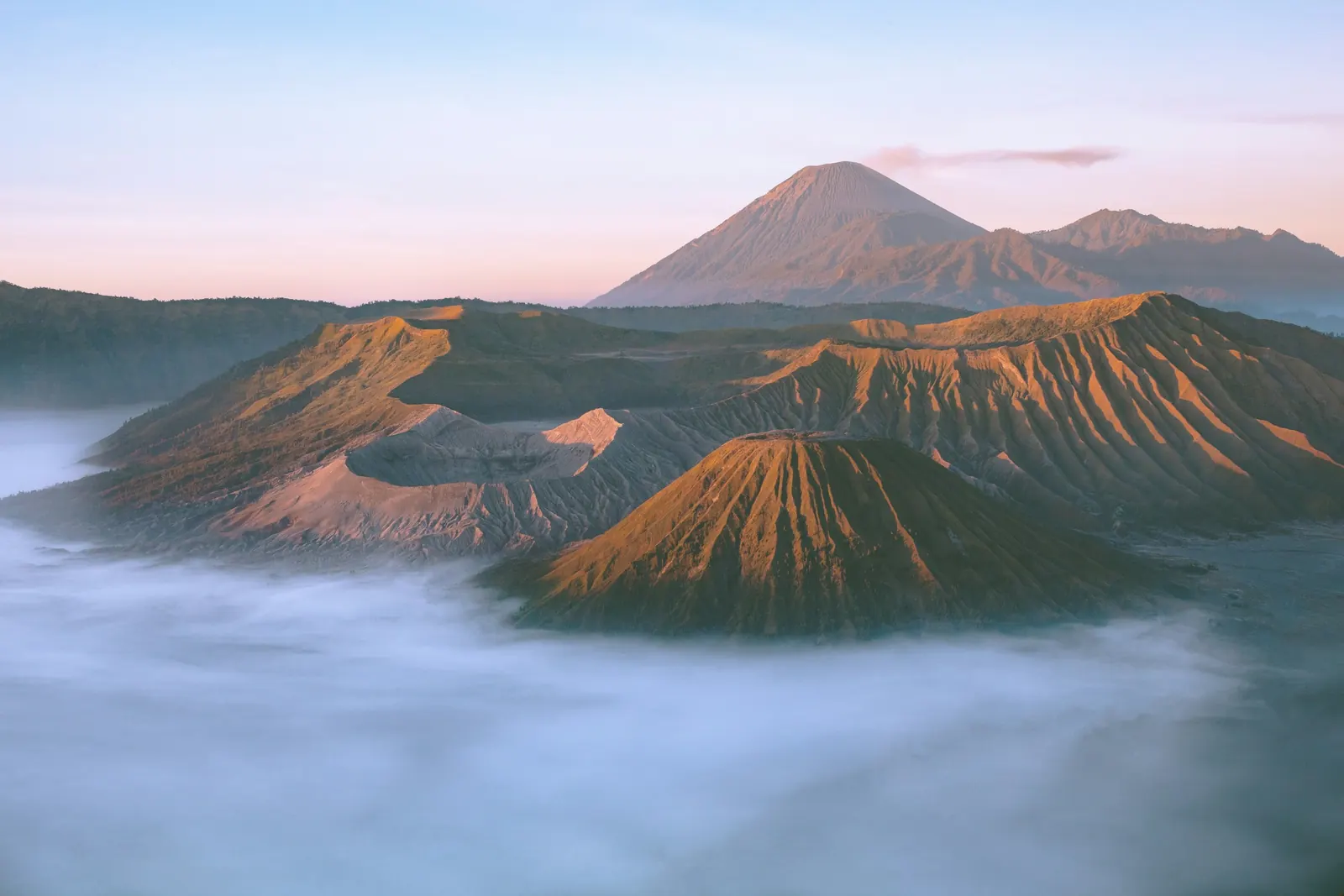
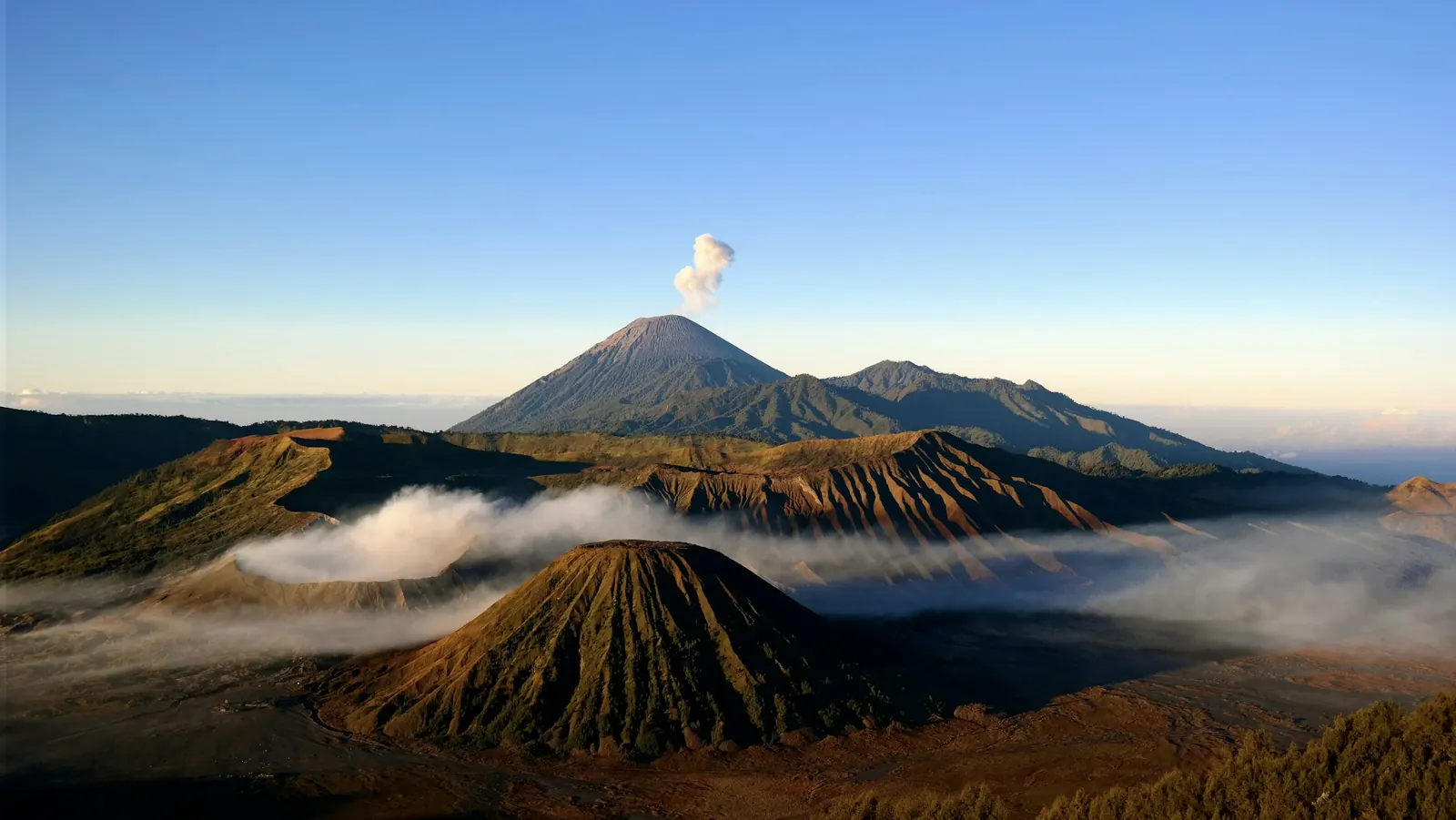
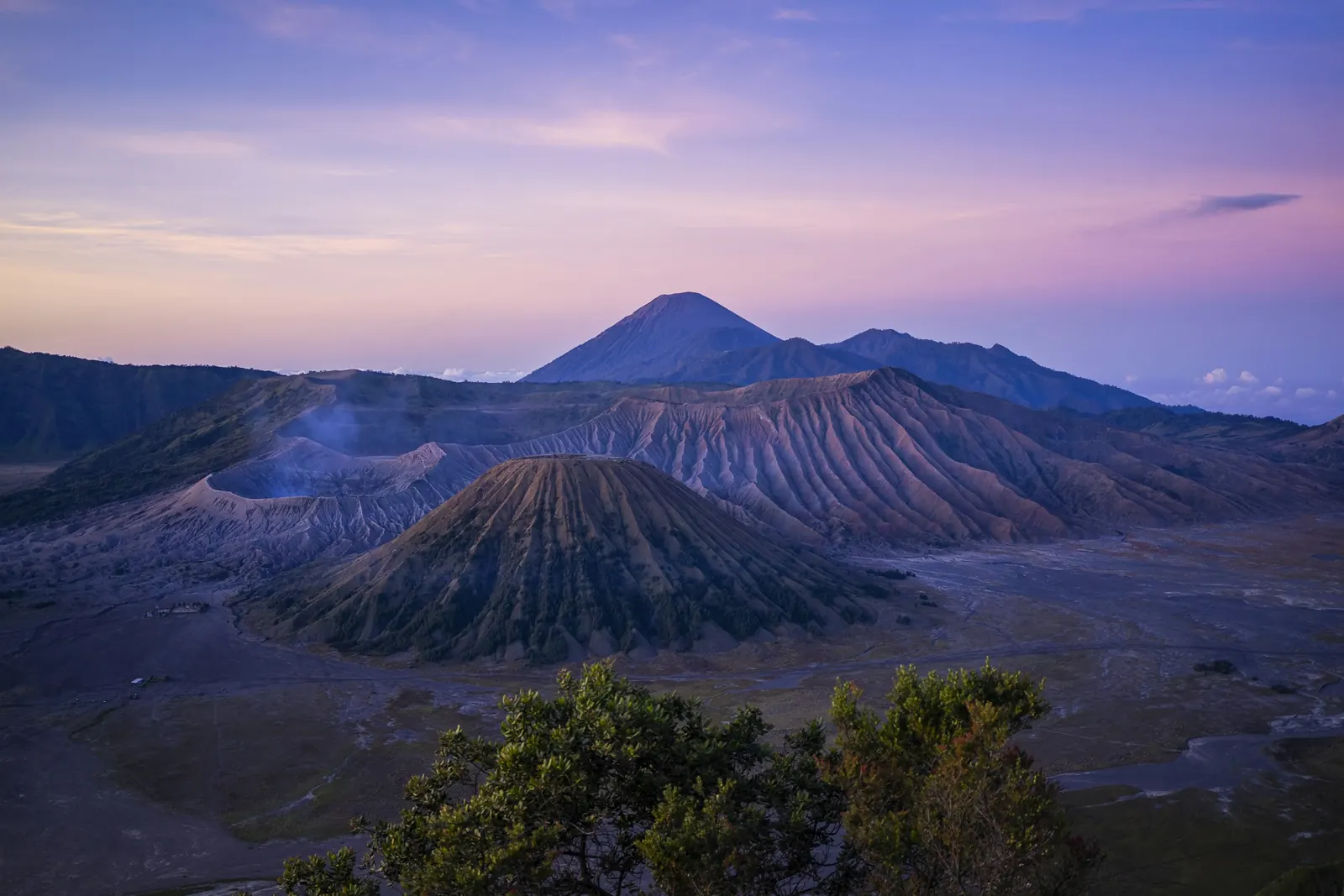
- Your classic postcard view. You stand on the outer caldera rim looking across at Mount Bromo, Mount Batok and Mount Semeru behind.
- Bromo Sea of Sand (~2,100–2,200 m)
- A wide ash plain (Pasir Berbisik) at the base of Bromo, crossed by jeep and on foot or horseback.
- Bromo crater rim (~2,329 m)
- The active volcano itself. A staircase of roughly 250–260 concrete steps from the sand up to the crater lip.
- Teletubbies-style savanna (~2,200–2,400 m)
- Rolling green hills (in the wet season) in the southern and eastern part of the caldera, reached by jeep tracks.
- Madakaripura Waterfall (~620 m)
- A tall canyon waterfall in the foothills, often combined before or after Bromo if you’re routing via Probolinggo.
On a standard sunrise jeep itinerary, you usually visit in this order:
- Penanjakan sunrise viewpoint
- Jeep descent into the Bromo Sea of Sand
- Bromo crater rim walk
- Optional savanna loop
- Exit to your next city (or back to your lodge)
- Optional Madakaripura add‑on if you pass the Probolinggo side
Bali Premium Trip doesn’t own the park jeeps or concessions. We arrange licensed local jeeps, guides and permits at transparent, direct rates through vetted partners, and you book everything directly with our Bali reservations team.
Penanjakan Sunrise Viewpoint Bromo: Your Orientation Point
For most visitors, the Penanjakan sunrise viewpoints are the first stop and the mental map for everything else you’ll see that morning.
What You Actually See From Penanjakan
From around 2,700–2,770 m on the outer Tengger caldera rim, you look across to:
- The wide Tengger caldera floor, 500–600 m below you
- Mount Bromo, a low, smoking cone at ~2,329 m
- Mount Batok, the striped, almost perfectly conical brown-green hill beside Bromo
- In clear weather, Mount Semeru, Java’s highest peak at 3,676 m, usually sending up a small puff of ash every 20–40 minutes
This is where most of the famous photos are taken, not from the Bromo crater rim itself.
There are actually several viewpoints, not just “one Penanjakan”:
- Penanjakan 1 (Seruni / Viewpoint 1) – Higher, more developed, larger platforms; more crowded.
- King Kong Hill – Slightly lower but often less packed; popular for private jeeps.
- Love Hill and lower lookouts – Simpler, sometimes used when traffic or weather makes the main point very crowded.
Your driver will normally choose based on your departure village (Cemara Lawang, Wonokitri, Tosari, etc.), traffic, and park regulations on the day.
Sunrise Timing: How Early You Need to Leave
Sunrise at Bromo is roughly between 05:15 and 05:45 depending on the month. To be in a good position:
- From Cemara Lawang area:
- Depart hotel: around 03:00–03:30
- Jeep drive to Penanjakan area: 45–75 minutes depending on traffic
- From Malang city:
- Depart hotel: around 00:30–01:00
- Drive to Tumpang / Gubugklakah jeep base: ~1.5–2 hours
- Jeep to Penanjakan zone: ~1.5 hours
- From Surabaya city:
- Depart: roughly 23:30–00:30 the previous night for a direct midnight run
- Total road + jeep time to Penanjakan: usually 4.5–6 hours including a quick rest stop
- From Probolinggo town:
- Depart: around 01:00–01:30
- Road to Cemara Lawang: ~1.5–2 hours
- Jeep up to Penanjakan: ~45–75 minutes
The earlier your departure, the better your chances of getting parking and a decent viewing spot, especially in local holiday periods.
How Cold Is It Really?
At Penanjakan before sunrise, temperatures commonly drop to:
- Around 5–10°C in the dry season (roughly May–September)
- Around 8–12°C in the shoulder / wetter months
The wind can make it feel colder. You need:
- A proper jacket or layered fleece
- Hat and thin gloves if you feel the cold
- Closed shoes or trainers (open sandals are uncomfortable on the dust and rocks)
You can rent thick parkas locally at many jeep bases for a small fee, but they’re shared and not always comfortable. Most guests are happier in their own layers.
The Bromo Sea of Sand Tour (Pasir Berbisik)
After sunrise, jeeps normally descend from the Penanjakan area down the winding road into the Tengger caldera and out across the Bromo Sea of Sand. This is the wide ash plain you see from above.
What the Sea of Sand Actually Is
The Bromo Sea of Sand tour takes you across a flat, grey-brown volcanic plain at around 2,100–2,200 m altitude:
- The surface is a mix of firm ash and loose sand; after dry, windy spells it can be very dusty.
- The area is officially called Lautan Pasir; one sector is known as Pasir Berbisik (“Whispering Sand”), after an Indonesian film shot there.
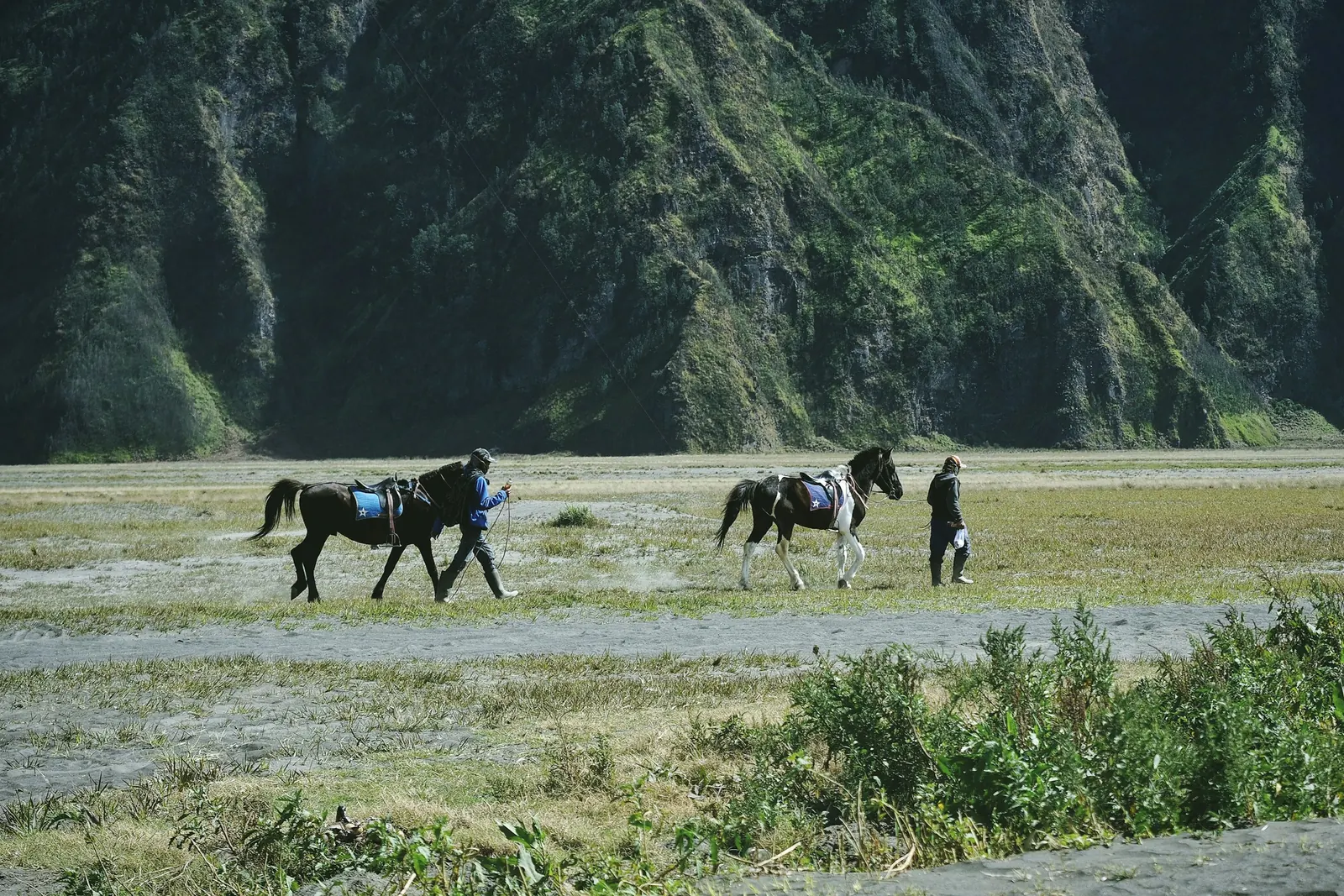
- You’ll share the tracks with other jeeps and, closer to Bromo temple, with horses used by local Tenggerese people to shuttle visitors partway toward the crater climb.
Most guests spend 20–40 minutes crossing, stopping for photos at a few classic points:
- Jeep-on-the-sand photos with Bromo and Batok in the background
- Short walks on the rippled ash field
- Occasionally, detours toward lesser-used ridges if time and park rules allow
Dust masks or a buff are a good idea, especially in the dry season and on weekends when jeep numbers spike.
Parking and Walking Distances
Jeeps usually park in the main lot near Pura Luhur Poten, the Hindu temple at the base of Bromo. From here:
- Parking to temple: ~5–10 minutes on flat sand
- Parking to foot of the Bromo crater steps: ~1.5–2 km each way across sand, taking 20–35 minutes on foot depending on pace
You can also ride a horse from near the temple to the bottom of the staircase for an extra local fee. The horses do not go up the stairs; you must climb that part yourself.
Bromo Crater Rim Walk: Climbing the 250-odd Steps
The bromo crater rim walk is the part most people either look forward to or quietly worry about. Physically, it’s short but can feel demanding due to the altitude, dust and crowding.
Route and Effort
From the edge of the Sea of Sand:
- You walk a gentle incline from the temple area toward the base of Bromo’s cone.
- The final section is a staircase of roughly 250–260 concrete steps to the crater rim at around 2,329 m altitude.
- Total elevation gain from the parking area is about 150–200 m.
Most reasonably fit visitors take:
- 20–30 minutes to climb from temple area to the start of the stairs
- 10–20 minutes to climb the stairs themselves, including short pauses
- 15–30 minutes at the top to walk a short section of the crater rim and look into the steaming crater
The staircase has a handrail on one side for much of the way, but some sections can be sandy and uneven. Good grip shoes help.
What You See from the Crater Rim
From the crater lip, you look straight down into:
- A wide, open volcanic crater with active vents producing constant gas and steam
- On a quiet day you’ll hear a low rumble from inside
- Sulphur smell is common; some visitors use a light mask or buff
To one side you see the Sea of Sand, Batok, and the outer caldera wall. On clear mornings, Semeru may still be visible behind.
The rim path beyond the staircase top is narrow in places and not fenced everywhere. Most visitors only walk a short, obvious stretch. This is a bromo crater hiking tour only in a limited sense: it’s more a short, controlled walk along the safest rim section, not a full summit traverse.
Safety and Sensible Limits
Conditions change with volcanic activity. At times, the park authorities restrict access to the upper part, or to a given distance from the crater, based on the activity alert level.
General points:
- People with serious heart or respiratory issues should consider skipping the climb or going very slowly.
- The dust can be harsh for sensitive lungs; a simple mask helps.
- There are no guardrails all the way around; obey local signs and your guide’s advice.
- On crowded mornings (particularly weekends and local holidays), the staircase can bottleneck; patience is important.
Our role at Bali Premium Trip is to keep you up-to-date on current access restrictions at the time of booking and again before your actual travel date, based on official information and local briefings.
Teletubbies Hills and the Bromo Savanna Tour
Beyond the sand and stairs, the bromo savanna tour shows a softer side to the Tengger caldera.
What the Savanna Looks Like
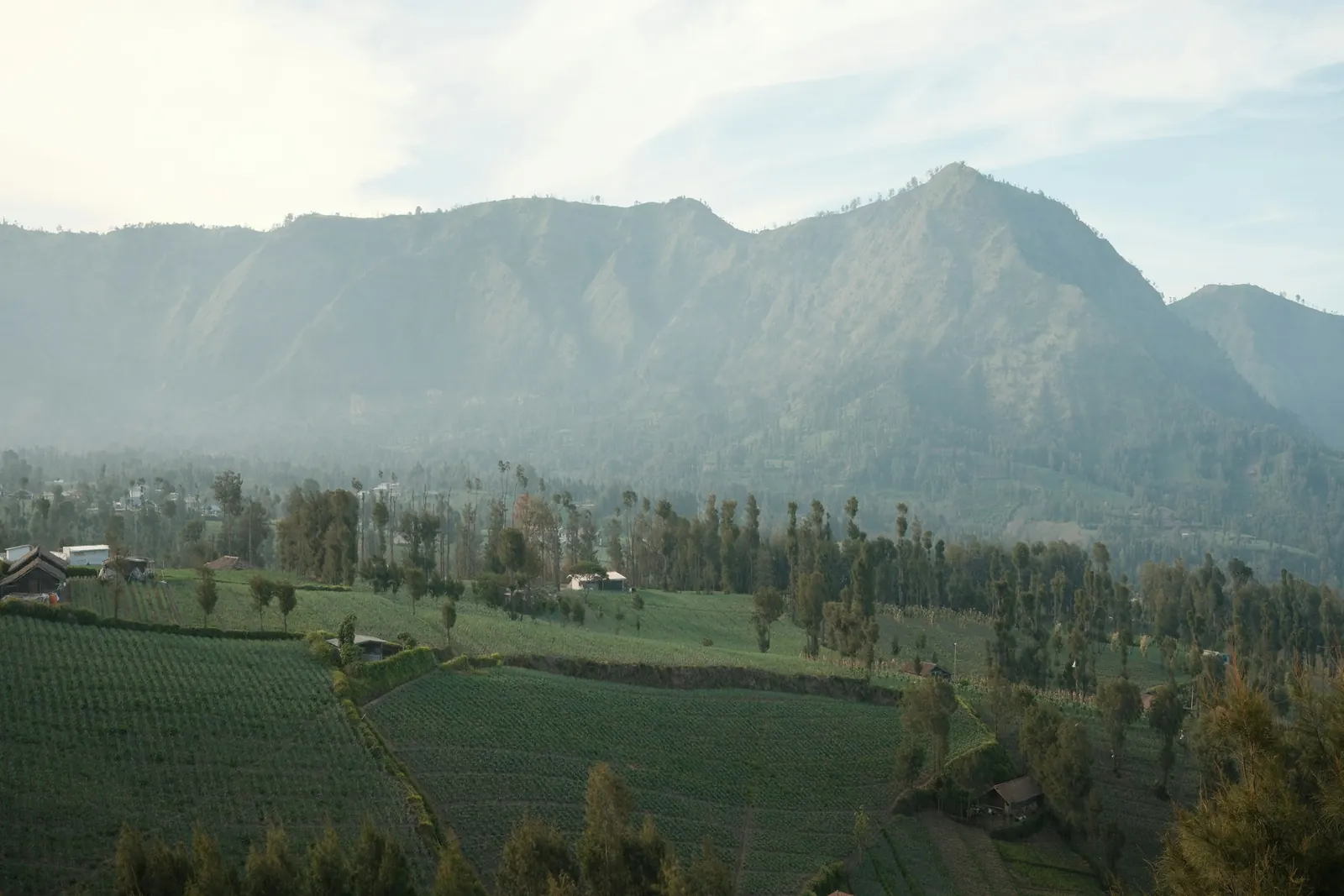
On the south and southeast side of Bromo, the landscape switches from bare ash to rolling grassy hills, commonly called Bukit Teletubbies (Teletubbies Hills) due to the rounded shapes.
- In the wet season (roughly December–March) the hills are vividly green.
- In the dry season (roughly July–October) they turn golden-brown, with a different, more austere beauty.
- Altitudes here are roughly 2,200–2,400 m, similar to the sand plain.
The savanna is reached via jeep tracks from the Sea of Sand side. There’s no long hiking required; you mainly step out, walk short distances for photos, and enjoy the broader view of the Tengger caldera slopes.
How Long the Savanna Add-On Takes
Adding the savanna loop usually requires:
- 1–1.5 hours extra jeep time and photo stops, depending on traffic and how far you go
- On a standard sunrise > crater rim > savanna itinerary, most guests are back at their hotel or village by late morning, around 09:30–11:00
If you’re short on time or very tired, your driver can skip the savanna and bring you straight back along the main track after the crater.
Understanding the Wider Tengger Caldera: Short Treks and Views
The tengger caldera bromo trek concept covers more than the classic jeep route. For travellers staying a night in the area, there are gentler half‑day walks and viewpoints.
Village Walks on the Caldera Rim
Staying in villages like Cemara Lawang, Ngadisari or Wonokitri gives access to:
- Short walks along the caldera rim at 2,200–2,300 m, with direct views down into the Sea of Sand
- Quiet sunset viewpoints with fewer people than Penanjakan at dawn
- A chance to see the patterned vegetable fields and Tenggerese farming life
These are easy, self-paced walks rather than formal “treks”. We often suggest guests arriving by late afternoon from Surabaya or Malang do a simple rim walk to understand the caldera layout before their sunrise jeep.
Longer Trekking Options
There are also more involved trekking routes inside the Tengger area, including full‑day ridge walks and cross‑caldera traverses. At present, most short‑stay visitors choose jeep‑based sunrise packages for efficiency, but:
- If you prefer more walking and less driving, our team can arrange licensed trekking guides for ~4–8 hour routes, subject to current park regulations.
- These are usually private arrangements and can be combined with the jeep sunrise on a different day.
Madakaripura Waterfall Bromo Add-On
If your route passes the Probolinggo side, a visit to Madakaripura waterfall Bromo can be added before or after your Bromo program.
Location and Access
Madakaripura lies in a narrow canyon at around 620 m elevation, roughly:
- 1–1.5 hours’ drive from the Cemara Lawang / Bromo area
- On the road linking Bromo with Probolinggo town and the coastal highway
From the parking area you:
- Take a short pillion ride on an ojek (motorbike taxi) for around 5–10 minutes, or walk if you prefer
- Walk a largely flat riverside path for roughly 30–45 minutes into the canyon, including some sections where you will get wet from spray or small waterfalls
The waterfall itself is high and dramatic, surrounded by overhanging cliffs. Because the path enters a slot-like gorge, it can close in heavy rain periods due to rockfall or flood risk. Your guide will advise based on conditions on the day.
How It Fits Your Bromo Day
A typical combination from Surabaya or Probolinggo might look like:
- Very early departure to Bromo
- Sunrise, Sea of Sand, Bromo crater rim, optional savanna
- Late morning / early afternoon drive down to Madakaripura
- 2–3 hours at the waterfall including walking and rest
- Continue onward to Surabaya / Probolinggo / Banyuwangi, or back to your East Java hotel
Adding Madakaripura extends your day by about 3–4 hours compared with a Bromo‑only run.
Private vs Open Jeeps, Entrance Fees and Typical Costs
Exact costs change with park policy, fuel prices and season, but these ranges (last verified June 2026) help you plan.
Private vs Shared Jeep: Which Fits the Main Sights?
Most visitors reach the viewpoints, Sea of Sand and savanna using 4×4 jeeps based in the park’s gateway villages.
| Option | Typical Capacity | Pros | Cons |
|---|---|---|---|
| Private jeep | 2–5 guests per vehicle (plus driver) | Flexible timing, easier photo stops, more comfortable for families or early-risers. | Higher per‑person cost if only 1–2 travellers. |
| Open/shared jeep | Up to 6–7 guests depending on seat layout | Lower per‑person price, can be sociable. | Fixed route and timing, less space, less control over stop durations. |
Bali Premium Trip focuses on private‑first itineraries: we default to private jeeps and only use shared options on request or when regulations require it.
Indicative Cost Ranges
For a sense of scale (all per person, indicative and varying by season, route, and group size):
- Bromo sunrise + crater + Sea of Sand + savanna by private jeep
- From Cemara Lawang area: often around US$70–130 per person for 2–4 guests including jeep, guide and park entrance.
- Midnight run from Surabaya or Malang (road transport + jeep + guide + park)
- Often in the US$120–220 per person range for 2–4 guests for a simple one‑night program, depending on hotel use and exact routing.
- Bromo + Ijen 2D1N or 3D2N combinations from Bali or Surabaya
- As a broad orientation, many travellers spend around US$250–450 per person for basic‑to‑comfortable private programs (excluding high‑end hotels), again depending heavily on season, room standard and group size.
These are not fixed quotes but planning numbers. You book directly with our own reservations team, with no third‑party mark‑ups, and we break out jeep, guide and park fee components clearly in your itinerary.
National Park Entrance Fees
The bromo tengger semeru national park guide fee structure is updated from time to time by the park authority. As a general pattern:
- Foreign visitor weekend/holiday entrance fees sit significantly higher than weekday and local visitor rates.
- There are separate tickets for Bromo and for Semeru trekking; standard Bromo sunrise/jeep visitors pay only the Bromo component.
Because the numbers can shift and there can be differential pricing for sunrise entries versus daytime visits, we always confirm the current published fees at the time of quoting your trip and again closer to your departure if changes are announced.
How a Typical One-Morning Bromo Itinerary Flows
To link all these “things to do” into one picture, here’s how a private sunrise program from the Bromo area usually runs:
Approximate Timeline (From a Base Near Cemara Lawang)
- 03:00–03:30 – Depart hotel in private jeep
- 04:15–04:45 – Arrive Penanjakan / equivalent viewpoint; short walk to platform; wait for dawn
- 05:15–06:00 – Sunrise and changing light over Bromo, Batok and Semeru
- 06:00–06:30 – Return to jeep; drive down into Tengger caldera
- 06:30–07:00 – Cross Bromo Sea of Sand; photo stops
- 07:00–08:00 – Walk to Bromo staircase and climb to crater rim; time at top
- 08:00–08:30 – Return across sand to jeep
- 08:30–09:30 – Optional savanna loop, Teletubbies Hills photos
- 09:30–10:30 – Return to hotel for breakfast and rest, or continue toward your next city
Shorter options skip the savanna; longer ones add Madakaripura or onward transfer toward Ijen or Bali ferries.
If you want help tailoring this to your exact arrival and departure times, you can plan your trip with our Bali Premium Trip planners via email or WhatsApp; we map each leg realistically, including traffic patterns and rest stops.
Who Should Prioritise Which Bromo Sights?
Different travellers care about different parts of Bromo. Here’s a quick way to decide where to spend your limited early‑morning energy.
If You’re Short on Time
Prioritise:
- Penanjakan sunrise view
- Quick pass across the Sea of Sand
- Bromo crater rim climb
You can skip the savanna and still feel you’ve seen the “core” of Bromo.
If You’re Travelling With Young Children or Older Parents
Consider:
- Private jeep (more flexible stops, easier if someone is cold or tired)
- Possibly doing a later, non‑sunrise visit to avoid the coldest hours
- Using horses for part of the sand crossing if everyone is comfortable with animals
- Keeping time on the crater steps short and optional
You still see the Sea of Sand and can decide on the crater once you’re there.
If You Love Landscapes and Photography
You’ll likely want:
- Early‑arrival sunrise at a less crowded viewpoint such as King Kong Hill when possible
- Extra time on the savanna loop for side angles of the Tengger caldera
- A night in a rim village to catch both sunrise and sunset light from different angles
We can match you with drivers and local guides used to photography‑focused stops, and adjust the order of the day based on where the light is best seasonally.
Planning With Bali Premium Trip
Mount Bromo Tour Package is the dedicated Bromo sunrise & jeep planning service of Bali Premium Trip. Our role is simple:
- Help you understand what to see at Mount Bromo and in what order
- Arrange private jeeps, licensed local guides and permits with vetted partners
- Stitch Bromo into a wider East Java route (for example a Bromo + Ijen combo from Bali or Surabaya) without rushed, unsafe driving windows
You book directly with our own Bali‑based team at clear, published rates. We don’t bolt on hidden third‑party margins. For up‑to‑date timing, costs and access rules, the most efficient step is to plan your trip with us by email or WhatsApp; we reply with a specific day‑by‑day outline rather than generic packages.
FAQs: Mount Bromo Things to Do Tour
Do we need to be very fit to walk the Bromo crater rim?
Most reasonably active people can manage the Bromo crater hiking tour: it’s about 1.5–2 km of mostly flat sand from the jeep park to the stairs, then roughly 250–260 steps to the rim. The altitude (around 2,300 m) and dust make it feel tougher than the numbers suggest, so those with heart or serious breathing issues should discuss it with us and their doctor in advance and climb slowly, or skip the stairs and enjoy the views from the temple area instead.
Can we see Bromo without doing a sunrise tour?
Yes. Daytime visits are possible and can be quieter and less cold. You can take a later jeep up to the viewpoints for a daylight panorama, then continue to the Sea of Sand and crater rim. You’ll miss the colour change at dawn, but you avoid a 02:00–03:00 start and the biggest sunrise crowds, which some families and older travellers prefer.
Is Madakaripura waterfall safe to visit year-round?
Access to Madakaripura depends heavily on rainfall. In the dry season it usually operates on most days, though sudden storms can still trigger short-notice closures. In the wettest months, sections of the canyon can be closed due to rockfall or flash-flood risk. We only include Madakaripura in your plan if local authorities and our on-the-day guides confirm it’s open and safe; otherwise we adjust your route.
What should we wear for a Mount Bromo sunrise and jeep tour?
Plan for cold, wind and dust. A warm jacket or layered fleece, long trousers, closed shoes with decent grip, and a hat and gloves for Penanjakan are strongly recommended. Bring a buff or mask for dust on the Sea of Sand and staircase, plus a small daypack for water and a light snack. You can always remove layers after sunrise as temperatures rise back toward 15–20°C.
How far in advance should we book a private Bromo jeep and sunrise package?
For regular weekdays outside Indonesian school holidays, 2–4 weeks is often enough. For weekends, Christmas–New Year, Idul Fitri and other local peak dates, we suggest booking at least 6–8 weeks ahead. Jeep allocations, better‑located guesthouses and some Penanjakan access routes fill early on those dates. Our team can confirm availability and hold a realistic private itinerary once you plan your trip via WhatsApp or email.